A digital textile printer is the right choice when a production line needs repeatable color, fast design changes, and direct printing across a defined range of fabrics. The practical decision is not simply about buying the fastest machine. It is about matching the printer format to the material format: a flatbed digital printer suits prepared garment cut pieces, while a belt-fed direct textile printer is better suited to continuous fabric and larger production runs.
For businesses balancing apparel customization with home textile or decorative fabric work, HJD provides both pathways. Our high-speed direct textile printer is listed with industrial nozzles, variable ink dot control, printing accuracy up to 1,200 DPI, and speed up to 720 m2/h, while its flatbed solution focuses on direct printing for ready-made garment pieces.
What Makes a Digital Textile Printer Suitable for Modern Production?
A useful digital textile printer must fit the production rhythm as well as the fabric. Textile businesses often handle a changing mix of cotton shirts, linen goods, silk designs, polyester products, blends, and decorative materials. The printer therefore needs stable media handling, controlled ink delivery, and a workflow that does not create unnecessary preparation between artwork and finished fabric.
Digital printing is especially valuable when designs change frequently or when a business wants to produce multiple patterns without preparing a new screen for every variation. It also supports a closer connection between digital artwork, sampling, seasonal collections, and made-to-order production. That flexibility can matter as much as headline speed because it reduces the delay between a design decision and a physical sample.
Flatbed and Belt Printing Serve Different Workflows
Flatbed printing for garment cut pieces
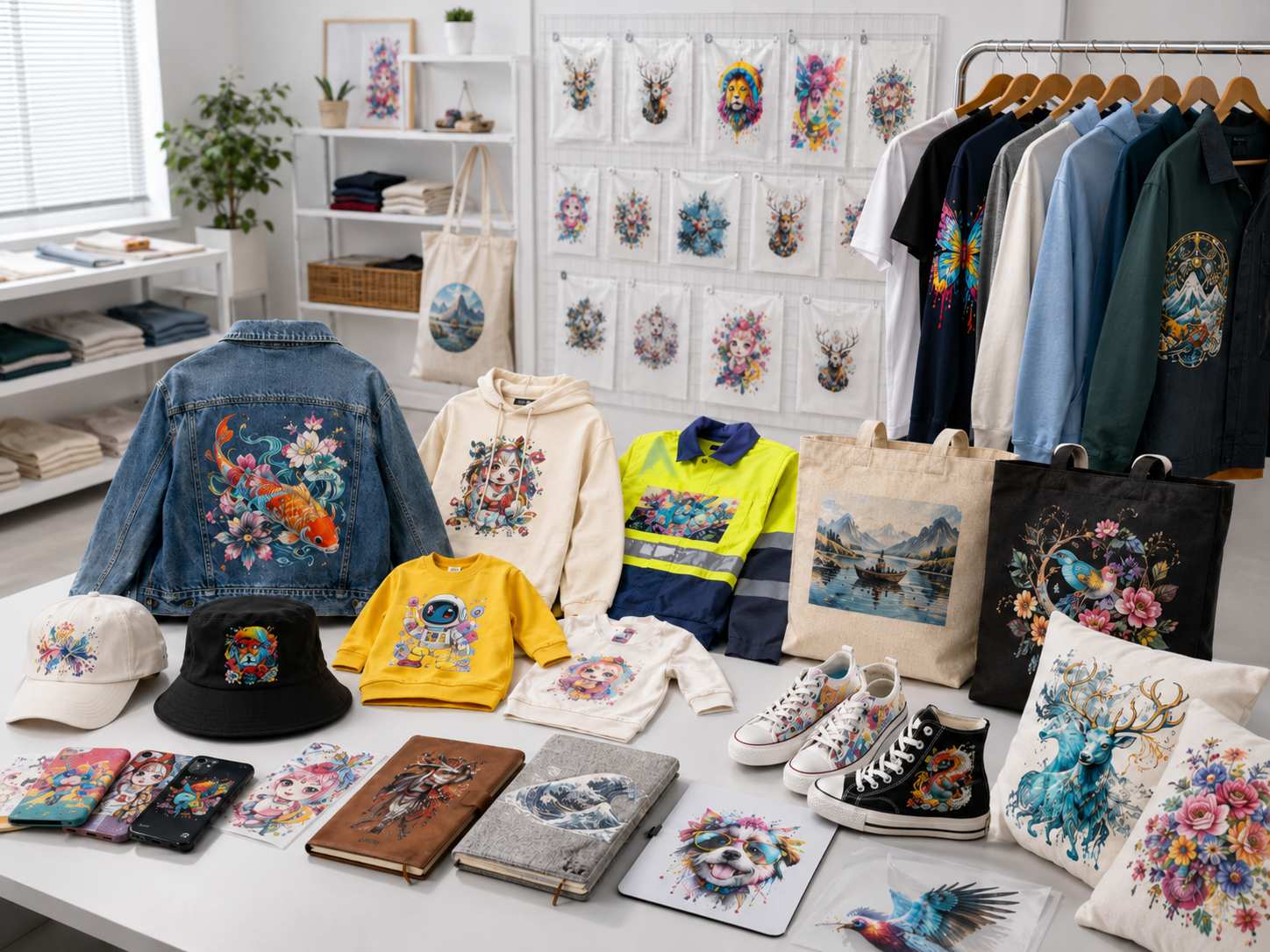
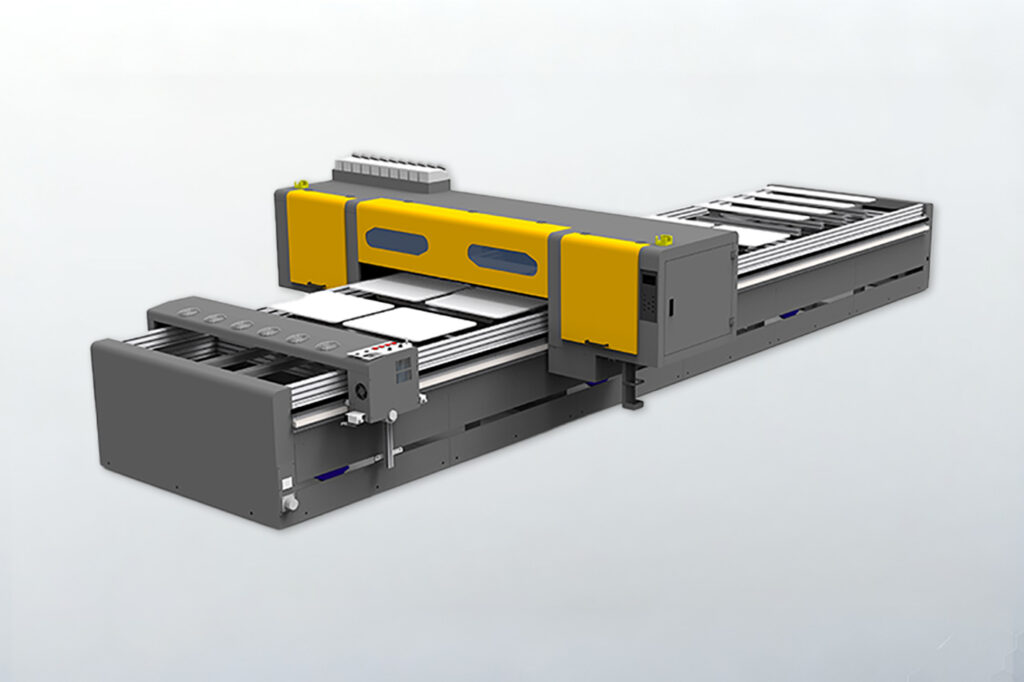
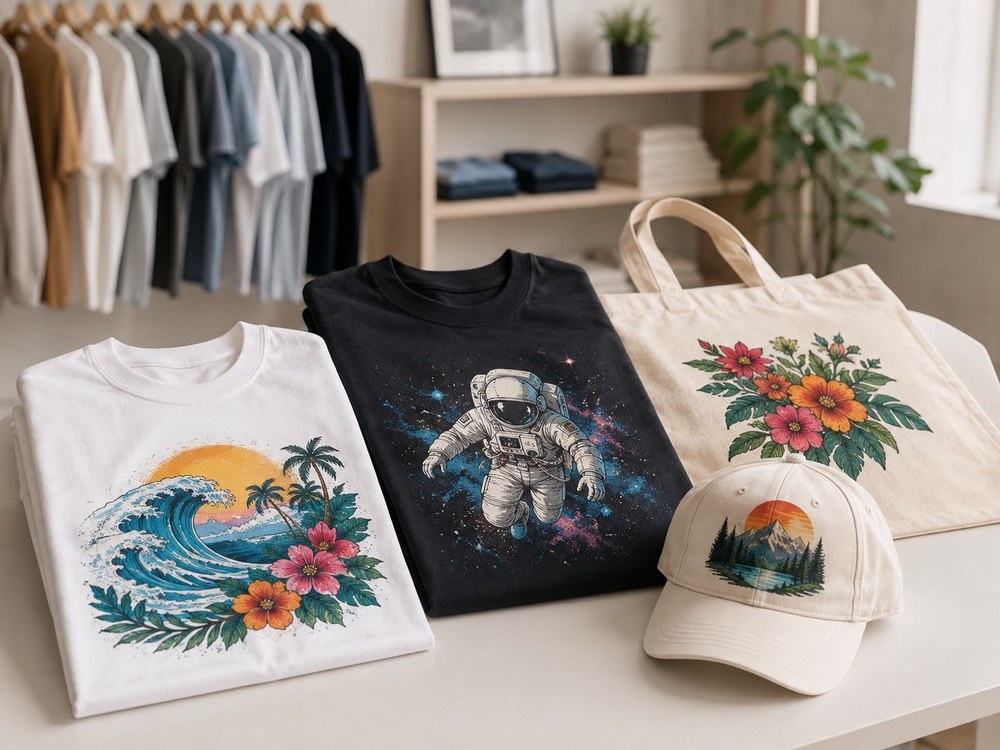
A flatbed digital printer holds a prepared cut piece in a stable printing position. This makes the format practical for T-shirts, hoodies, children’s wear, workwear, canvas bags, hats, and other pieces that are already cut or shaped before decoration. The flat surface helps operators position the printable area consistently, which is important when a design must sit accurately on different garment panels.
HJD’s flatbed solution is designed for direct textile pigment ink printing without transfer media. Its process options include full-color direct printing and white-and-color printing, allowing the same equipment concept to address both light and dark fabrics. For apparel workshops, e-commerce fulfillment, and creative studios, this can simplify the path from digital file to breathable printed product.
Belt printing for continuous fabric production
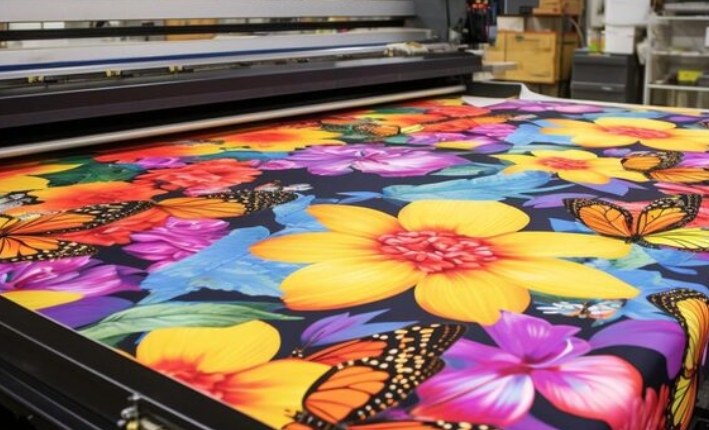
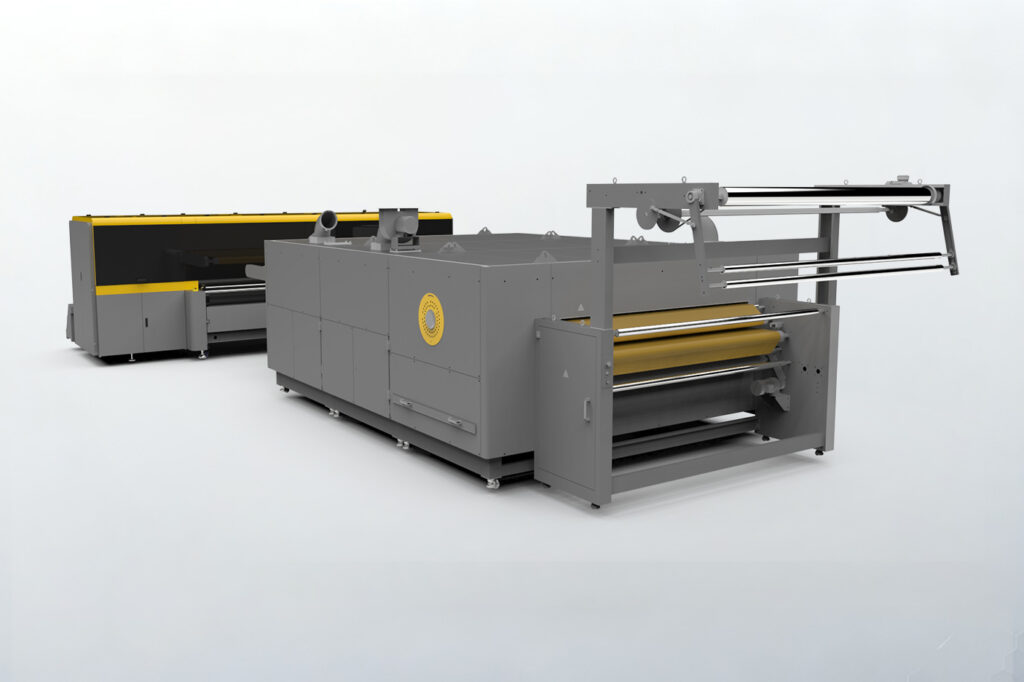
A belt-fed direct textile printer is built around continuous material movement rather than individual garment placement. The format is better suited to fabric rolls and long runs for apparel fabric, curtains, bedding, cushions, carpets, sportswear, outdoor products, and decorative textiles. The belt system, feeding tension, drying, and ink delivery must work as one controlled process because a small feeding variation can become a visible pattern shift over a long length.
HJD’s High-Speed Digital Direct Textile Printer is positioned for this production environment. The product is presented with high-precision industrial nozzles, variable ink dot function, cotton, linen, silk, and other fabrics, and a listed output of up to 720 m2/h. In practice, the relevant question is whether the line can maintain stable feeding, color consistency, and drying at the required working speed.
Technical Factors That Influence Print Quality
Industrial nozzles and variable ink dot control
Print quality depends on more than nominal resolution. Industrial nozzles and variable ink dot control help the printer manage fine details, gradients, solid areas, and tonal transitions across different artwork styles. A production manager should look for stable jetting and repeatable color placement rather than choosing equipment from a single speed number.
Fabric feeding, alignment, and drying
On a flatbed machine, the key concern is keeping each cut piece flat and correctly positioned. On a belt printer, the priority shifts to continuous tension, tracking, and drying. These differences affect how the equipment fits into the factory: a flatbed workflow is organized around loading and unloading pieces, while a direct textile line is organized around feeding, printing, drying, inspection, and take-up.
Ink compatibility and color performance
Fabric content changes how ink behaves and how the final print is evaluated. Cotton, linen, silk, polyester, nylon, and blends may require different process settings and ink choices. HJD’s direct textile product range is associated with multiple textile materials, but the exact ink and finishing method should always be matched to the fabric, color target, and required durability before production begins.
Where HJD Digital Textile Printing Fits Best
Apparel and garment customization
HJD’s flatbed digital printer is a natural fit when the business prints finished garment panels, T-shirts, hoodies, children’s wear, workwear, bags, or hats. The direct process avoids a separate transfer carrier and is suited to businesses that value a soft, breathable print hand and quick artwork changes. It can also support sampling before a larger apparel program is released.
Home textiles and decorative fabrics
For curtains, bedding, cushions, carpets, wall cloth, and other broad fabric products, the continuous format is usually more practical. A high-speed industrial textile printer can help keep the production route centered on roll-fed material, repeatable color, and efficient drying. This is where the direct textile printer becomes more than an apparel machine: it becomes part of a wider fabric-production workflow.
How to Choose the Right Printing Configuration
Start with the material format. If most jobs arrive as individual garment cut pieces, a flatbed digital printer may offer the clearest loading and positioning routine. If the work arrives as continuous fabric rolls, a belt-fed direct textile printer is more likely to fit the process. If both formats matter, compare the expected share of each workflow instead of assuming one machine will perform every task equally well.
Next, evaluate more than output speed. Review the printable width, fabric feeding method, ink compatibility, drying capacity, design-change time, operator workload, and maintenance routine. A machine that runs quickly but needs frequent correction may deliver less useful production than a slightly slower system that holds alignment and color over the full shift.
Finally, assess the supplier as part of the production solution. HJD presents a broad equipment range covering direct textile, DTG, DTF, sublimation, screen printing, and UV printing processes. That wider range can be useful when a business needs to build a coherent printing workflow rather than add an isolated machine with no clear role in the line.
Conclusion
The best digital textile printer is the one that matches the physical form of the work, the fabric mix, and the expected production rhythm. Flatbed printing gives garment cut pieces a controlled direct-printing route, while a high-speed belt-fed system is better aligned with continuous fabric and larger textile applications. HJD brings both approaches into a broader digital printing portfolio, helping businesses choose a solution around real workflow needs rather than a generic specification list.
Explore HJD digital textile printing solutions for your apparel or fabric production workflow.
FAQ
Q: What is a digital textile printer?
A: A digital textile printer applies artwork directly to textile materials through a computer-controlled inkjet process. Depending on the format, it can print individual garment cut pieces or continuous fabric. The main advantages are rapid design changes, digital file control, and the ability to produce detailed patterns without preparing a separate screen for every design.
Q: Is a flatbed or belt printer better for apparel production?
A: The better choice depends on the material format. A flatbed digital printer is suited to ready-made garment cut pieces such as shirts, hoodies, bags, and hats. A belt-fed direct textile printer is more appropriate when apparel fabric arrives in rolls or when production must continue across long lengths.
Q: Can a digital textile printer print on cotton, linen, and silk?
A: Yes, HJD’s high-speed direct textile printer is suitable for cotton, linen, silk, and other fabrics. The correct ink, pretreatment, drying, and finishing settings still depend on the fabric construction and the required result. Testing the intended material before regular production remains an important quality-control step.
Q: What should businesses check before choosing an industrial textile printer?
A: Check the material format, printable width, fabric compatibility, ink system, feeding stability, drying method, design-change time, and maintenance requirements. Also consider whether the supplier can support the broader workflow. HJD can be evaluated across flatbed garment printing and continuous direct textile printing according to the actual production mix.