
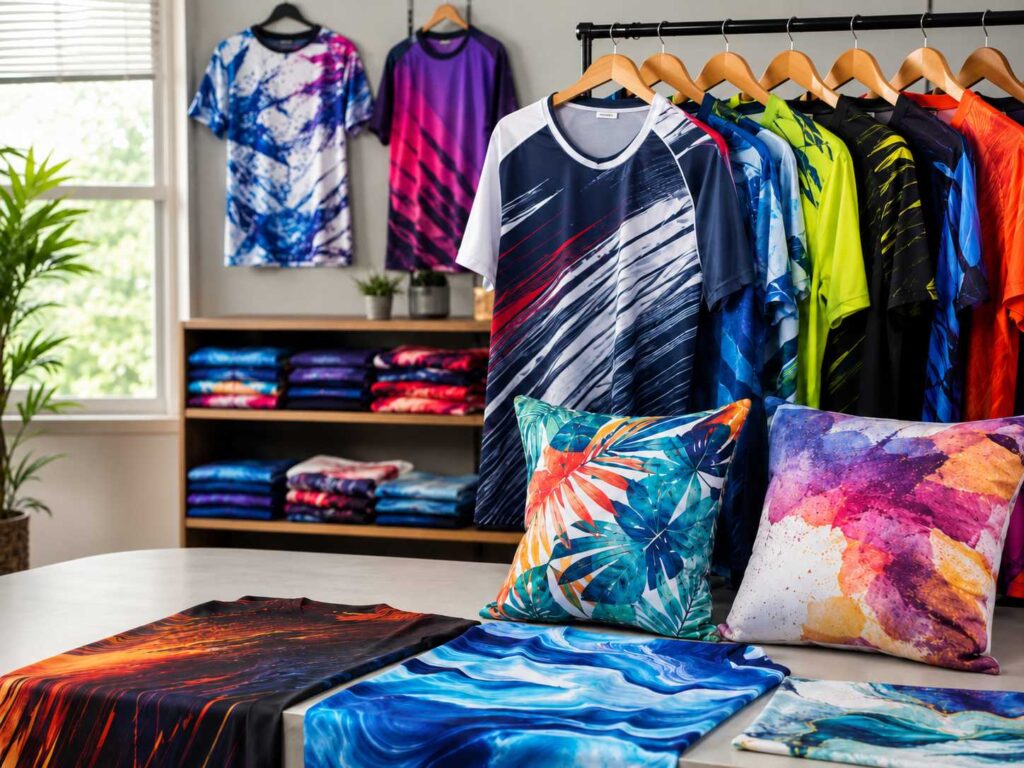
The textile industry is undergoing a significant transformation as traditional screen printing gives way to advanced digital workflows. Industrial manufacturing now demands higher efficiency, reduced waste, and the ability to handle complex, multi-colored designs without the burden of plate-making costs. By adopting modern technology, factories can achieve zero inventory and perfectly match the demands of flexible supply chains.
What Makes a Sublimation Heat Press Essential for Modern Factories?
In a professional printing environment, the sublimation heat press serves as the bridge between digital design and physical fabric. This technology is vital for achieving the high-durability, wash-resistant results required by sportswear and home textile brands.
Understanding the Science Behind Vibrant Colors
The process relies on the chemical transition of ink from a solid state on transfer paper to a gaseous state under heat, allowing it to penetrate polyester fibers directly. This results in a glue-free, breathable, and skin-friendly finish that meets strict environmental standards. Unlike traditional methods, this process generates zero wastewater, aligning with modern dual-carbon goals and green manufacturing policies.
The Role of the Sublimation Heat Press in Efficiency
The industrial machinery, such as the 600 series or 800 series that comes from HJD, is made to use the heating tube oil wet heating technology. The temperature distribution will be evenly distributed throughout the whole width of the fabric, which means there will be no difference in color. Large diameter rollers with sizes between 420 mm and 1000 mm offer a possibility to achieve higher transfer speed, reaching even 230m/hour.
Why Choosing the Right Heat Press Sublimation Printer Changes the Game
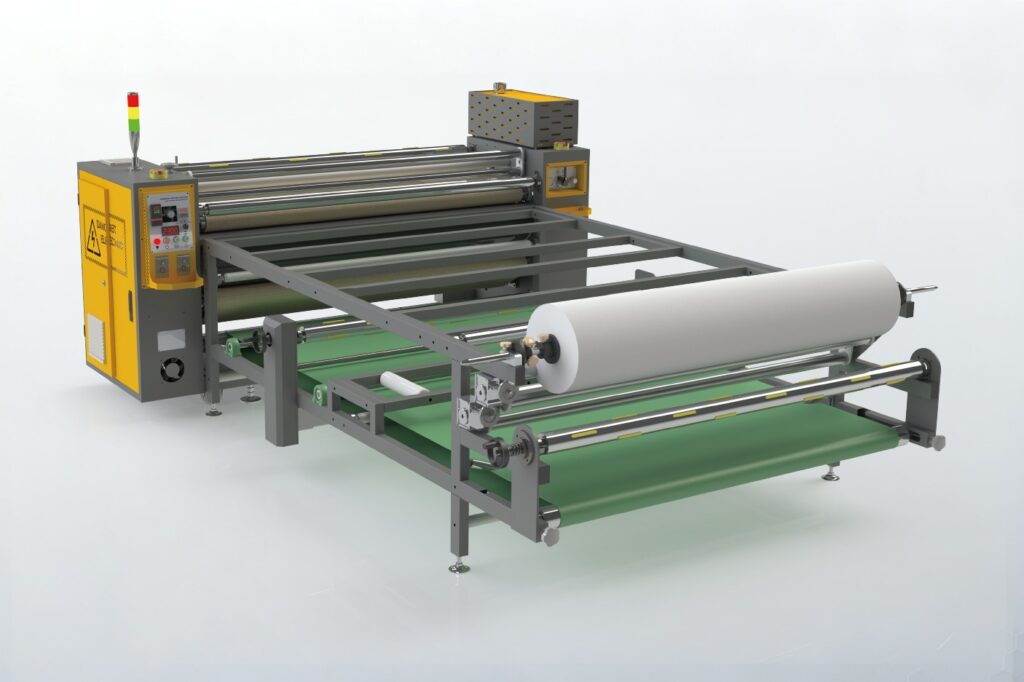
The output quality of the final textile is fundamentally limited by the precision of the initial print. Selecting a high-performance heat press sublimation printer is the first step in ensuring industrial success.
Speed vs. Quality: Finding the Spot
Modern industrial printers often utilize Epson i3200-A1 printheads arranged in arrays of 4, 8, 12, or even 16 heads. For example, a 16-head flagship model can reach an industry-leading productivity of 880 square meters per hour at a 3.2-meter width. This allows factories to handle ultra-large orders and urgent production needs with ease. High resolution, often reaching 1440dpi, ensures that gradients and ultra-fine patterns are reproduced with photographic clarity.
Features of a High-Performance Heat Press Sublimation Printer
To maintain such high speeds, the heat press sublimation printer must include several critical features:
- Industrial negative pressure ink supply systems to ensure stable ink flow without air bubbles.
- Constant tension swing rod feeding systems to prevent paper wrinkling and ensure smooth, compact take-up.
- Integrated lifting ink stacks for automated cleaning, scraping, and moisturizing of printheads, which reduces manual intervention and extends component life.
- Magnetic levitation linear motors for smoother, quieter, and more precise carriage movement compared to traditional belt drives.
How to Execute Flawless Heat Press Transfers: A Step-by-Step Workflow
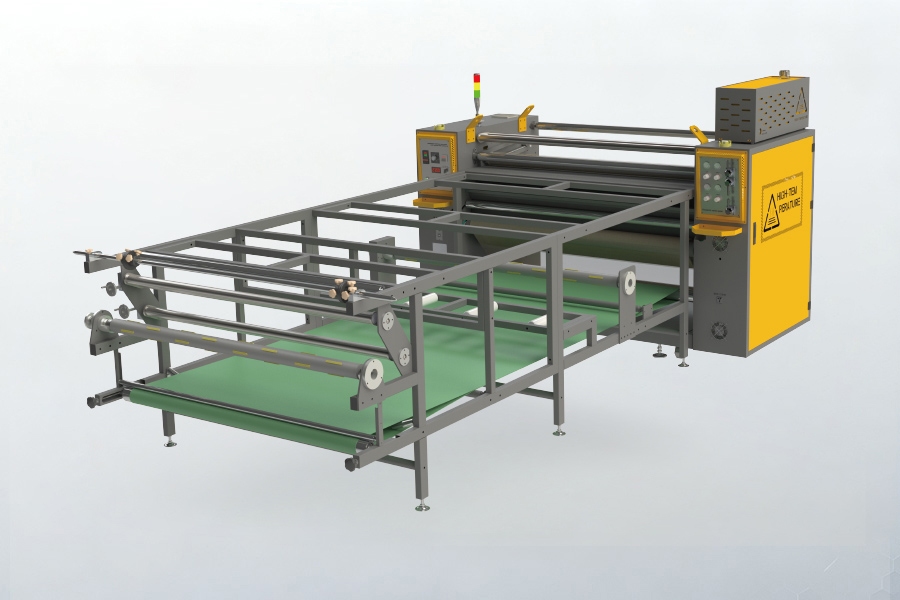
Achieving a flawless result in industrial production requires a standardized workflow that minimizes human error and maximizes equipment potential.
Precision Digital Design and Output
The workflow begins with professional design software. Utilizing RIP software such as Honsoff or Maintop allows for precise color management and intelligent layout. Advanced systems now include AI-driven color separation and real-time calibration to maintain color difference control within a narrow margin of 0.5%.
Selecting Quality Consumables for Heat Press Transfers
The success of heat press transfers depends heavily on the compatibility of the ink and paper. Using high-concentration sublimation inks ensures rich layers and saturated colors that are sun-resistant and fade-resistant. Additionally, modern printers are optimized for thin transfer papers, such as 30g variants, which significantly reduces consumable costs while maintaining transfer efficiency.
Mastering the Sublimation Heat Press Machine Operation
Once the paper is printed, it must be loaded into the sublimation heat press machine. Key operational factors include:
- Roller Selection: Choosing a roller diameter that matches the required output speed. A 1000mm roller is ideal for flagship-scale factories needing ultra-high load stability.
- Felt Quality: Utilizing 100% Nomex felt ensures heat resistance and wear resistance, which is essential for maintaining pressure and heat transfer accuracy.
- Safety Protocols: Ensuring the anti-pinch functions and emergency stop systems are operational is mandatory for compliance with global safety standards like CE.
Scaling Up: How to Select the Best Sublimation Heat Press Machine for Your Output
Small Batch vs. Large-Scale Industrial Production
For e-commerce sampling and small-batch customization, a roller with a 200mm or 270mm diameter may suffice, offering a transfer output of 30 to 100 meters per hour. However, large-scale apparel and home textile factories require the 600 or 800 series sublimation heat press machine to cover fabric widths up to 3.2 meters and handle 24-hour continuous production cycles. These flagship machines often feature intelligent upgrades like visual positioning and automatic felt correction to ensure precision at scale.
Maintaining Your Sublimation Heat Press Equipment for Longevity
Consistent maintenance is the only way to avoid costly downtime and maintain high print quality over years of operation.
Pro-Tips for Daily and Weekly Maintenance
It is imperative to keep the heat press machine safe from damage caused by its own investment by performing cleaning of the printhead surface and nozzle plates using appropriate chemicals so that there is no clogging of the heat press. Weekly maintenance will comprise cleaning of the ink tanks and filters to ensure that there is no deposition of sediments.
Future Trends: What’s Next for the Sublimation Heat Press Machine?
As we move toward 2026, several key trends are shaping the future of the industry:
- AI Integration: AI will soon be a standard configuration for self-diagnosis and self-learning capabilities, leading to low-manpower or even unmanned workshops.
- Eco-Friendly Inks: The growth of pigment and disperse inks that require less water and energy will accelerate as global environmental policies become more stringent.
- IoT Connectivity: Remote monitoring and predictive maintenance via cloud platforms will allow factory managers to optimize energy consumption and quality in real-time.
Conclusion
To move towards the creation of a new generation high-speed textile printing line with its digital technology demands not only the use of modern machines but also cooperation with the specialist who knows the whole chain of processes. HJD company possesses 20 years of experience in the sphere of manufacturing of printing machinery, providing the full line of products from top models of printers up to ovens and other equipment necessary for the process.
For customized industrial solutions and high-performance equipment, please contact us today.
FAQ
Q: How does the printhead configuration affect a heat press sublimation printer?
A: The quantity of printheads, like the 8, 12, or 16 Epson i3200-A1 printheads used in HJD premium printers, is the factor that defines the printing speed and capacity. The greater the number of printheads in the heat press sublimation printer, the higher the speed of up to 880㎡/h, thus managing even large orders on short notice.
Q: What are the benefits of a large-diameter roller in a sublimation heat press machine?
A: A roller with a bigger diameter, like the 600mm or 1000mm size that is used in the HJD sublimation heat press machine, has a greater surface area for heating. This makes it possible for the fabric to be in contact with the heat for long enough despite being faster, making the maximum output 230 meters per hour without losing color vivacity.
Q: How can a factory reduce costs when producing heat press transfers?
A: Firms may save costs through the use of highly concentrated ink and thin transfer paper (for example, 30g), which is possible for use on modern HJD printing presses. Furthermore, independently manufactured core parts and energy-saving drying machines are key ways to decrease the cost per square meter of cloth.
Q: What maintenance is required for a sublimation heat press machine to ensure long-term stability?
A: In order to secure the stability of operation of an HJD Sublimation Heat Press Machine over the years, cleaning of ink lines and lubrication of guides once per week is necessary. Checking the oil level in the rollers and calibration of the automatic correction system of felts provide safe operation of the equipment.