
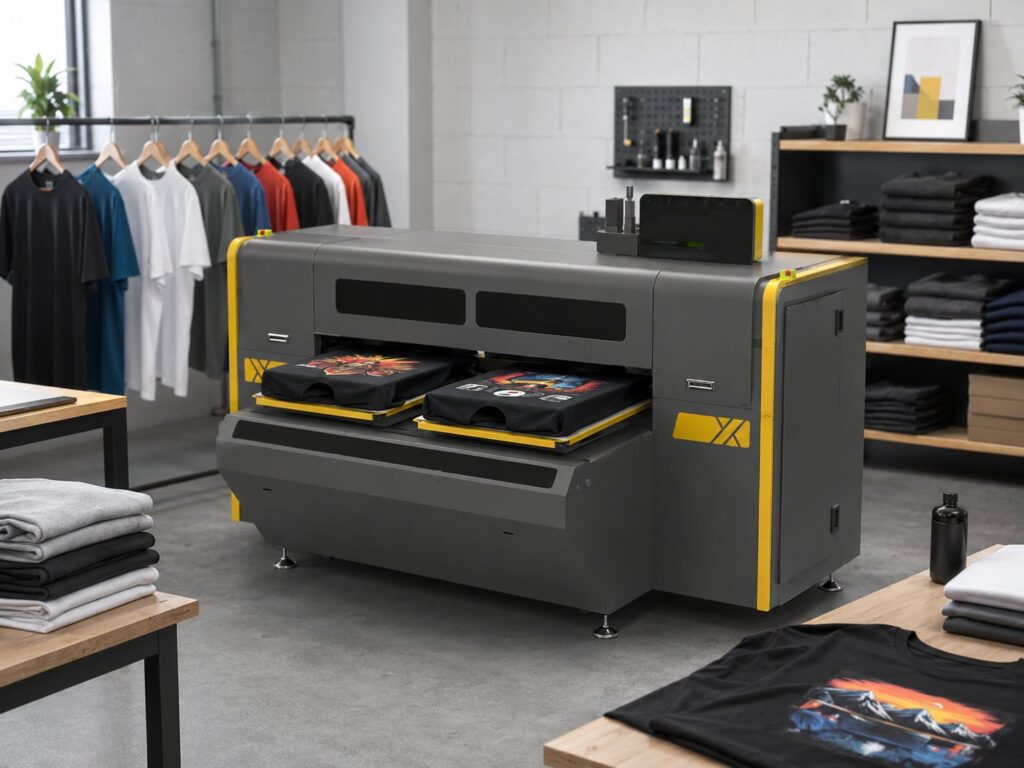
The global textile industry in 2026 is characterized by a definitive shift toward digitalization. This transformation is driven by the explosive growth of high-speed single-pass technology and the increasing demands of fast fashion and livestreaming e-commerce. For businesses navigating this landscape, the need for a small-batch, multi-variety, and fast-delivery model is no longer optional; it is a prerequisite for survival. Central to meeting these demands is the DTG printer with dual-station, a specialized industrial-grade solution designed to maximize throughput without compromising on quality or environmental standards.
What is a DTG Printer with Dual-Station?
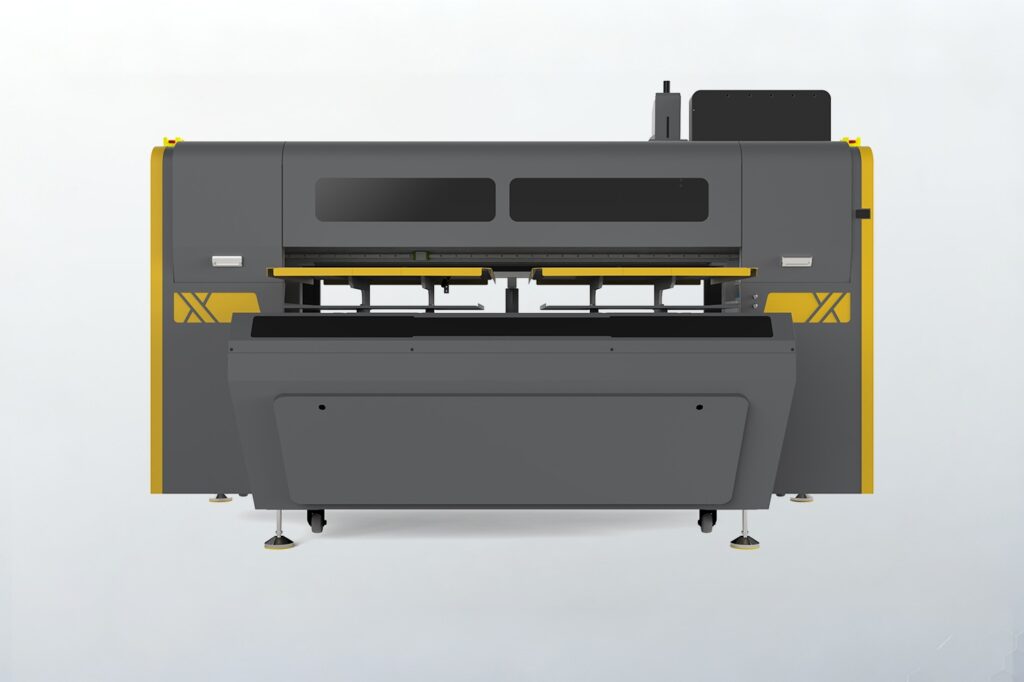
Comprehending the technological superiority of this equipment requires delving into its mechanical structure and working mechanism. In contrast to single-platen machines, the dual-station system enables uninterrupted alternating operation without any stoppage period.
Alternating Operational Structure
The core advantage of the DTG printer with dual-station lies in its dual-station cyclic operation mode. While one station is engaged in the high-precision printing process, the second station remains accessible for loading or unloading garments. This makes up for the loss of idle time needed for placing the garments manually, thereby doubling the possible output in one shift. With the use of precise transmission systems, each and every move will be made accurately, allowing for both color and white ink printing at once.
Precision Engineering and Ink Systems
Achieving industrial-grade results requires stable hardware. The HJD dual-station system utilizes an enclosed aluminum platen with a flatness deviation of less than 0.05mm. Such precision is essential in order to keep the optimal distance between the nozzle and the substrate within 3mm to 4mm in order to keep the 720×2400 DPI print quality high. Moreover, the printer uses a siphon positive and negative pressure ink feeding system, providing stable pressure inside the printer and avoiding the formation of air bubbles and damaging the printhead. The printer is complemented by high-performing printhead models, such as Epson i3200-A1 and Brother KS1680H series.
Diverse Application Scenarios: Where the DTG Printer with Dual-Station Shines
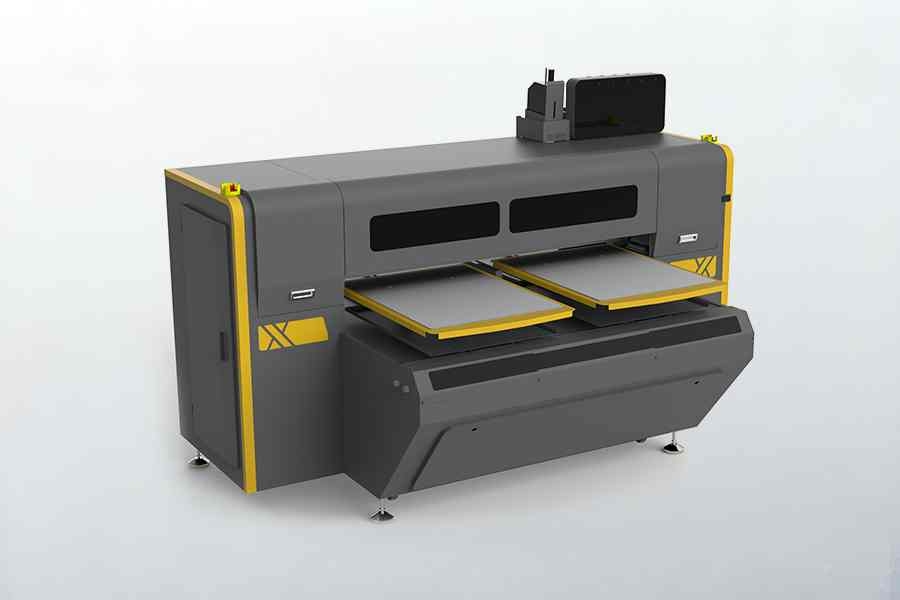
The flexibility of the dual-station digital printer allows it to transcend traditional garment printing boundaries.
Fashion Customization and E-commerce Fulfillment
In the realm of personalized apparel, the ability to switch patterns instantly without plate-making is invaluable. This equipment excels in producing T-shirts, hoodies, and children’s wear for brand-name clothing and creative studios. The precision of the dual-station model ensures that the high pattern restoration required for fashion-forward designs is consistently achieved.
Expanding Beyond Garments
The application of this technology extends to accessories and home textiles. Canvas bags, hats, and denim items are easily accommodated by the adjustable printhead height, which ranges from 3mm to 30mm. This versatility allows businesses to diversify their product lines, capturing market share in cultural and creative product sectors. Real-world success was demonstrated as early as the 2021 Qingdao International Textile Printing Exhibition, where HJD launched advanced simultaneous white and color output solutions that received widespread market acclaim.
Why Should You Upgrade Your DTG Printer Capacity in 2026?
As environmental regulations become more stringent and consumer preferences lean toward sustainable products, the standard DTG printer must evolve. The year 2026 marks a turning point where efficiency and eco-friendliness must coexist.
Unmatched Production Speed
Productivity metrics for a modern DTG printer with dual-station have reached unprecedented levels. Depending on the configuration, an A3-sized pattern can be completed in as little as 22 seconds using Brother series printheads or up to 3.5 minutes for high-detail Epson configurations. This speed allows manufacturers to process e-commerce fast-response orders with remarkable agility. The capability to handle 100% cotton, high-cotton blends, linen, and even ready-made hoodies makes this equipment a versatile powerhouse for modern factories.
Intelligent Maintenance and Sustainability
Maintenance costs often erode the profitability of digital printing operations. To solve this, HJD has integrated a maintenance-free integrated ink lifting stack that supports automatic cleaning, scraping, and moisturizing. This system prevents ink sedimentation and printhead clogging, which are common issues when using white pigment ink. From a sustainability perspective, the use of textile pigment ink ensures that the process remains eco-friendly, requiring no water washing and producing zero emissions, thus meeting the strict global environmental standards of 2026.
How to Identify the Best DTG Printer Suppliers for Your Business?
Choosing a partner is as important as choosing the machine. Professional DTG printer suppliers in 2026 are expected to provide more than just hardware; they must offer comprehensive industrial solutions.
Research and Development Strength
Technological innovation is the cornerstone of reliability. HJD boasts 20 years of technology accumulation and a specialized R&D team led by three PhDs and over 30 highly educated professionals. This depth of expertise has resulted in 17 national patents and 6 software copyrights, ensuring that the core technology—from printhead control to ink circulation—is both proprietary and stable. Partnering with suppliers that emphasize industry-university-research cooperation ensures that the equipment remains compatible with the latest global printing trends.
One-Stop Solutions and After-Sales Support
Contemporary entrepreneurs prefer hassle-free solutions. Top-tier DTG printer vendors ensure a turnkey solution including full factory automatic line design, technical training, and consumption supply. The post-sale response is an important criterion for which the technical support service should be available 24/7 and able to respond to technical queries within one hour. In addition, overseas storage centers and various international certifications, such as CE and ISO 9001, enable market penetration.
Conclusion
The DTG printer with dual-station represents the pinnacle of digital textile efficiency in 2026. By combining the speed of alternating operation with the precision of industrial-grade printheads and the sustainability of pigment inks, HJD provides a robust path to profitability in a competitive market. Embracing this technology allows brands to meet the fast-paced demands of modern e-commerce while adhering to the highest quality and environmental standards.
To explore how these industrial solutions can transform your production line, please contact us.
FAQ
Q: Does the HJD DTG printer support printing on dark fabrics?
A: Yes, the HJD DTG printer with dual-station is specifically designed for simultaneous white and color ink output. This technology allows for high-opacity white ink base printing on dark fabrics such as black cotton, denim, and fleece without complex pre-treatment, ensuring vibrant colors and high pattern restoration.
Q: What is the production speed of a DTG printer with dual-station?
A: The productivity varies based on the printhead configuration. For an A3-sized pattern, the DTG printer with dual-station can achieve speeds between 22 seconds and 3.5 minutes per piece. This high-efficiency cyclic operation mode makes it ideal for handling large-batch orders and e-commerce fast-response demands.
Q: What maintenance is required for a DTG printer with dual-station?
A: Modern HJD equipment incorporates an intelligent maintenance system. The system comes with a maintenance-free integrated ink lifting stack capable of carrying out automatic cleaning, scraping, and moisturizing. Also, the system has an inbuilt white ink circulation and agitation system, which prevents sedimentation and clogging of nozzles.
Q: Is the DTG printer eco-friendly?
A: Yes, the DTG printer uses textile pigment inks, which conform to the environmental regulations of 2026. The process of printing using this method does not involve any water wash, produces zero emissions, and consumes less energy and water than screen printing.