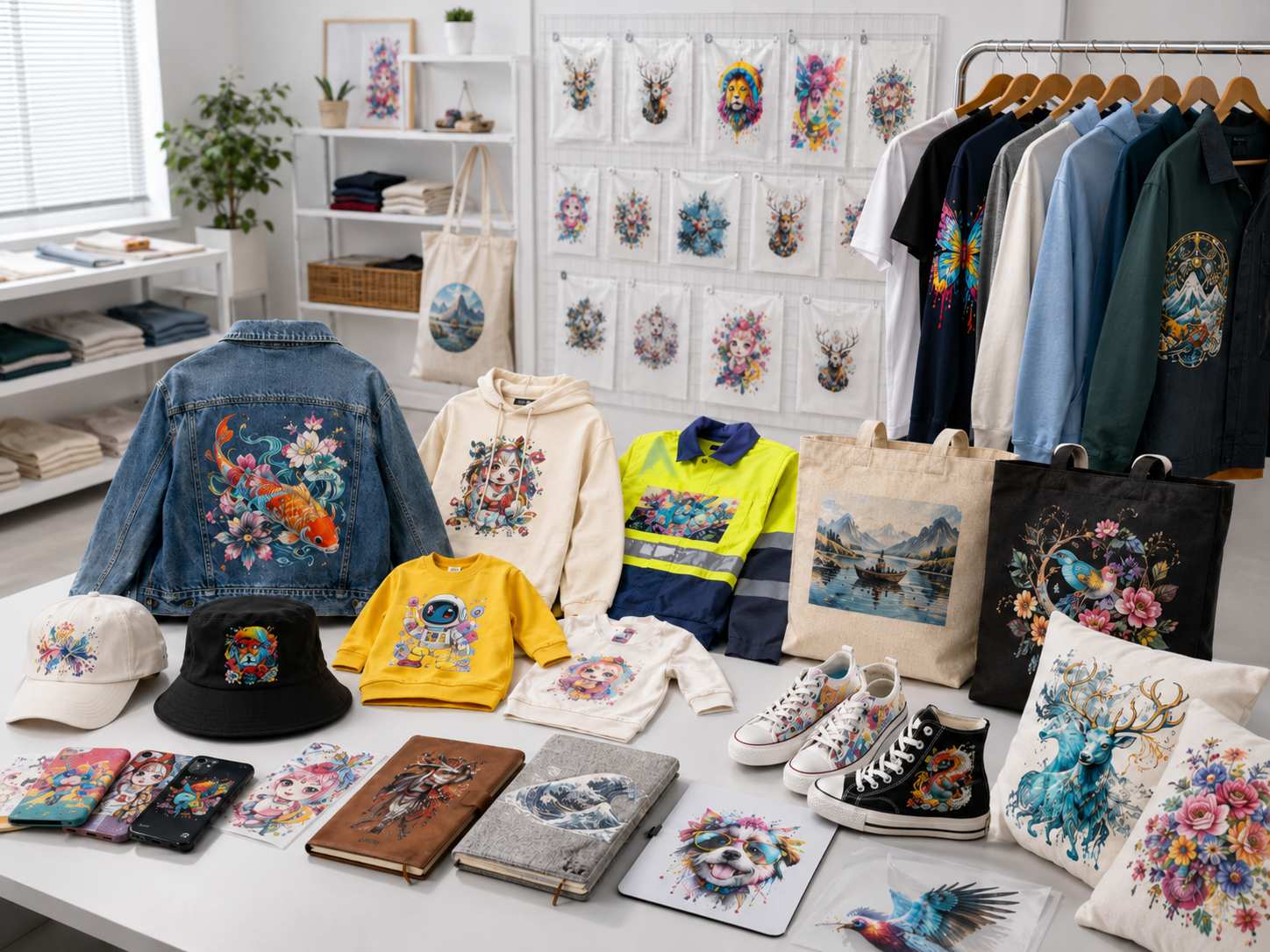

A DTG printer gives apparel producers a direct way to print full-color artwork on garment cut pieces without transfer media. For factories, studios, and fast-response clothing lines, the real value is not only digital artwork control; it is the combination of fabric handling, white ink management, drying, and repeatable positioning. HJD’s new high grade flatbed type digital printer is built around that production question: how to print detailed designs on cotton, linen, polyester, blends, and finished apparel components while keeping workflow stable.

Why a DTG Printer Matters in Modern Apparel Production
Direct Printing Changes the Production Flow
Traditional apparel printing often depends on screens, transfer films, or separate process stages before the artwork reaches the fabric. A direct to garment printer shortens that path by jetting textile pigment ink onto the material itself. The result is a workflow that responds well to frequent design changes, small collections, and artwork with gradients or photographic detail.
The HJD flatbed system is designed for direct printing on ready-made garment cut pieces rather than only standard finished T-shirts. That distinction matters in production because cut pieces can be printed before sewing, decoration, or final assembly. It gives factories more room to position graphics accurately across panels, pockets, accessories, and shaped textile parts.
Where Flatbed Printing Fits Better Than Transfer-Based Methods
Transfer-based processes can be practical for many jobs, but they add consumables and handling steps. Flatbed digital garment printing removes the transfer medium from the workflow, which can help create a softer and more breathable print feel when the fabric, ink, pretreatment, and curing conditions are correctly matched. The process still demands discipline; fabric flatness, ink behavior, and drying control have a direct effect on final quality.
How Flatbed DTG Printing Works on Garment Cut Pieces
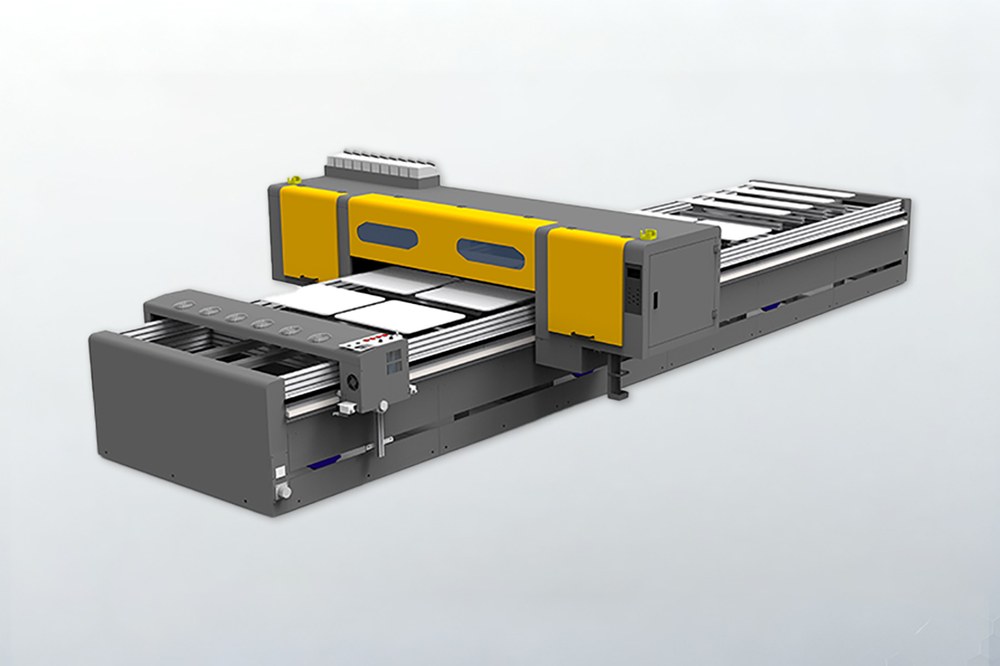
From Pre-Coating to Digital Printing
The HJD news machine supports full-color direct injection, simultaneous white-and-color printing, and a pre-coating priming process. These modes allow the operator to match the print path to the fabric color and artwork requirements. Light fabrics may prioritize full-color speed and softness, while dark fabrics often need a stable white ink base before the color layer can show with enough opacity.
The flatbed format helps keep garment cut pieces in a controlled position during printing. On uneven textiles, small height differences can affect ink placement, sharpness, and edge definition. HJD lists an adjustable printhead height from 3 mm to 50 mm, with 3 mm as the optimal height, giving the system room to handle different textile thicknesses while keeping precision in focus.
White Ink and Color Printing for Light and Dark Fabrics
White ink is central to modern DTG printing because it supports vibrant color on darker textiles. The challenge is that white pigment requires careful circulation and maintenance to reduce sedimentation and clogging risk. HJD’s flatbed DTG design includes automatic cleaning, scraping, moisturizing functions, and a siphon ink supply system, which all point to the same practical goal: keeping the ink path stable during production.
Key Details That Shape Print Quality and Stability
Printheads, Platform Precision, and Fabric Width
HJD’s new flatbed DTG printer uses Epson i3200-A1 printhead configurations with 2, 4, or 6 heads. More printheads can support higher productivity, but the best configuration depends on artwork density, color mode, and the production rhythm around loading and unloading. For A3-size output, the machine lists productivity up to 220 pieces per hour in full-color mode and up to 80 pieces per hour in white-and-color mode.
The standard print width is 1300 mm, with customization available. This gives the machine a broader role than simple T-shirt decoration because it can address larger cut pieces and multiple smaller parts arranged across the bed. For apparel production, width should be considered alongside artwork placement, platen planning, fabric distortion, and drying capacity.
Transmission and Motion Control
Stable digital printing depends on repeatable motion. The HJD configuration uses an X-axis AirTAC guide with Leisai servo, a Y-axis CSK guide with rack and Xinjie servo, and Z-axis electric synchronous lifting. Those details matter because printhead movement, fabric position, and height adjustment all influence registration, edge clarity, and color layering.
Drying, Color Fixing, and Workflow Continuity
Printing is only one part of DTG quality. The ink must be dried and fixed in a way that supports color strength, wash performance, and fabric comfort. HJD’s new flatbed digital printer uses a reciprocating treadmill oven with 3500 W power, while the total machine power is listed at 2000 W. In practice, drying capacity should be matched to print coverage, white ink use, fabric weight, and production speed.
Production Scenarios for HJD Flatbed DTG Printing
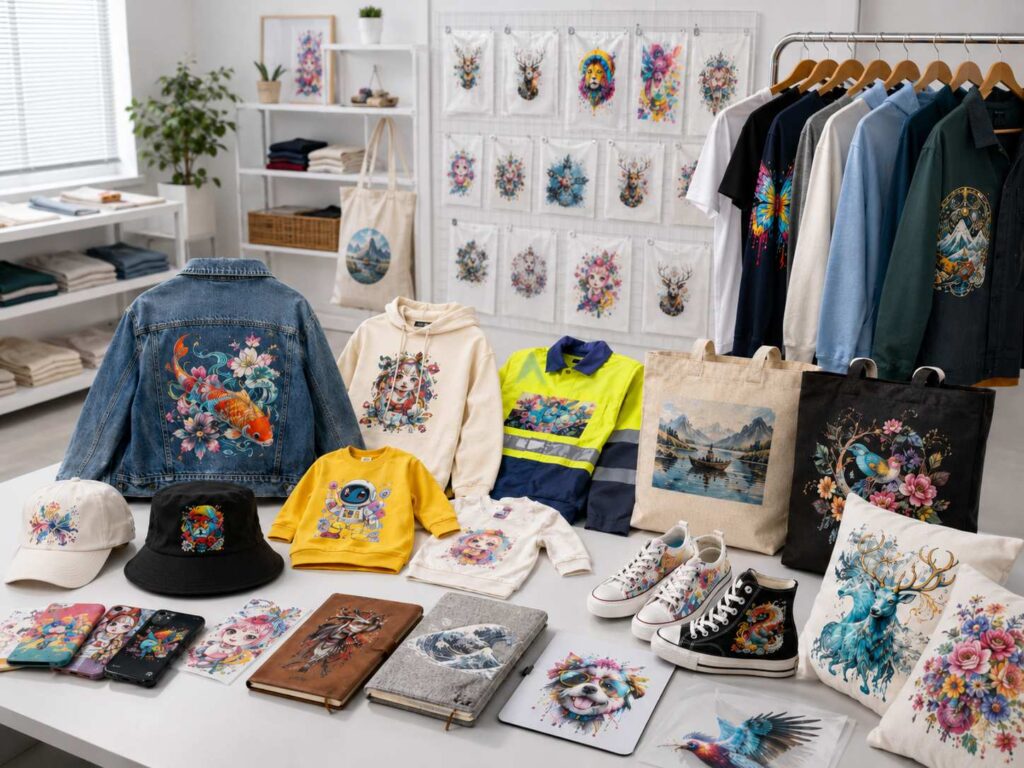
T-Shirts, Hoodies, and Branded Apparel
T-shirts and hoodies remain natural applications for a DTG printer because they often carry detailed graphics, short seasonal runs, and frequent design updates. A flatbed system can also serve children’s wear, workwear, couple outfits, and branded apparel programs where color accuracy and repeatable placement matter. HJD’s configuration is especially relevant when a producer wants to connect artwork flexibility with a more industrial handling structure.
Canvas Bags, Hats, and Home Textile Cut Pieces
The same machine category can support accessories such as canvas bags and hats, as well as home textile cut pieces. These applications benefit from a controlled flat surface because the item may not behave like a standard shirt panel. When the artwork must sit cleanly on a shaped or thicker textile piece, adjustable printhead height and stable feeding become part of the quality equation.
How to Match a DTG Printer to Real Production Needs
Order Mix, Fabric Type, and Artwork Complexity
The best use case for a DTG printer starts with the order mix. Frequent artwork changes, variable garment colors, short runs, and personalized designs favor digital direct printing. Repeated one-color or two-color graphics in very high volumes may still benefit from screen printing, especially when setup time is absorbed across a long run.
HJD’s flatbed digital printer is most compelling when the production plan includes cut pieces, broad fabric compatibility, white-and-color printing, and a need for controlled drying. The 2/4/6-head printhead options allow the equipment concept to scale across different output expectations. A production manager should match the printhead configuration to the actual mix of designs, not simply the highest possible speed.
Space, Power, Climate, and Operator Workflow
A DTG printer also needs the right environment around it. The listed machine size of 6220 mm x 2884 mm x 1244 mm and 980 kg weight means floor planning matters. Power, ventilation, loading space, fabric staging, drying flow, and operator access all influence whether the machine performs smoothly in daily work.
Conclusion
A DTG printer is valuable when apparel production needs detailed artwork, flexible order sizes, direct textile output, and faster movement from design file to printed fabric. HJD’s new high grade flatbed type digital printer brings that idea into an industrial flatbed format, combining Epson i3200-A1 printhead options, white-and-color printing, adjustable printhead height, textile pigment ink, and integrated drying for garment cut pieces and related textile applications.
Explore HJD industrial printing solutions to compare DTG, screen printing, DTF, sublimation, and UV options for your production workflow.
FAQ
Q: What is a DTG printer used for in apparel production?
A: A DTG printer is used to print digital artwork directly onto garments or garment cut pieces with textile pigment ink. It suits T-shirts, hoodies, children’s wear, workwear, canvas bags, hats, and home textile pieces. It is especially useful when designs change often, color detail matters, or production needs shorter runs with less setup.
Q: How is a flatbed DTG printer different from a transfer process?
A: A flatbed DTG printer places ink directly on the textile surface, while transfer methods usually print onto a separate film or paper before applying the image to fabric. Direct printing can reduce intermediate materials and support a softer feel, but it requires careful control of pretreatment, fabric flatness, ink behavior, and drying.
Q: Why does white ink matter in DTG printing?
A: White ink creates an opaque base layer for dark or colored fabrics, helping the color image appear brighter and more accurate. It also adds maintenance demands because white pigment can settle more easily. Automatic cleaning, moisturizing, scraping, and a stable ink supply help reduce clogging risk and keep production more consistent.
Q: What fabrics can HJD flatbed DTG printing handle?
A: HJD’s flatbed DTG application range includes cotton, linen, polyester, and blended fabrics. The suitable process depends on fabric surface, thickness, color, pretreatment, artwork coverage, and drying settings. Testing fabric samples before regular production helps define printhead height, ink volume, curing conditions, and expected hand feel.