
Advancements in DTG Printing Technology for 2026
Evolution of Direct-to-Garment (DTG) Systems
The evolution of direct-to-garment printing has been marked by a steady transition from single-station to multi-station configurations. Early DTG printer systems were limited by their single platen design, restricting throughput and operational flexibility. The introduction of the DTG printer with dual-station marking was a significant milestone, enabling alternating operation modes that allowed simultaneous white and color ink printing on cotton fabrics. This double-station white ink DTG printer is an industrial-grade digital printing device designed for garment printing. Equipped with Epson/Brother series printheads and adopting a dual-station alternating operation mode, it can directly print with simultaneous white and color ink on cotton and high-cotton fabrics.
As industrial automation matured, manufacturers like HJD began integrating intelligent control systems, paving the way for quadruple-station architectures. This 4-station white ink DTG printer is an industrial-grade digital printing machine specially designed for garment printing. It supports both dry and wet printing modes, realizes simultaneous white and color printing, and requires no complicated pre-treatment for dark fabrics. These advancements reflect how digital textile trends have shaped modern DTG innovation—emphasizing speed, precision, and sustainability.
Integration of Quadruple-Station Mechanisms
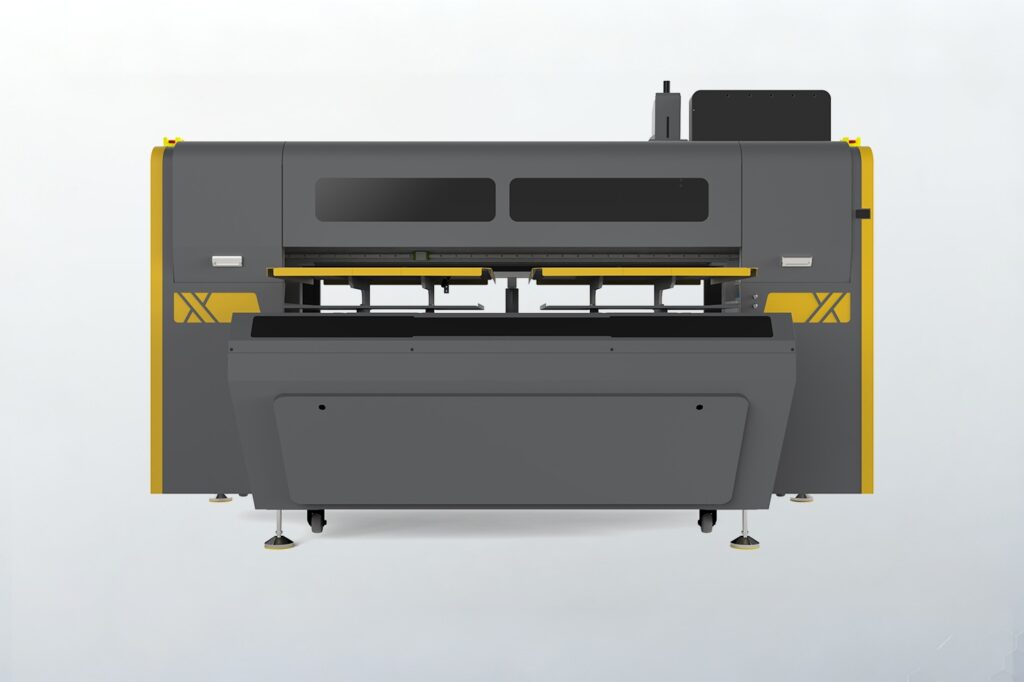
The DTG printer with quadruple-station design represents a leap in workflow optimization. Its four synchronized stations operate in a circulating structure that allows continuous loading, printing, curing, and unloading without interruption. Compared with the DTG printer with dual-station configuration, which alternates between two platens, the quadruple system doubles effective throughput while maintaining alignment accuracy through servo-driven motion control.
The technical advantage lies in its ability to balance high-speed production with detailed image reproduction. Equipped with high-precision printheads and a 4-station circulating structure, it integrates intelligent control and automatic maintenance systems, providing high precision, high efficiency and easy operation. This integration ensures that each station performs independently yet synchronously within an automated cycle—enhancing scalability for industrial apparel production lines.
Industrial Workflow Optimization with Quadruple-Station DTG Printers
Streamlining Production Processes
In large-scale garment manufacturing environments, minimizing idle time is crucial. The quadruple-station DTG printer architecture enables simultaneous operations across multiple stages: one station loads fabric while another prints; the third cures the ink; the fourth unloads finished garments. This synchronized circulation drastically reduces downtime compared to conventional setups.
Advanced models utilize real-time monitoring systems that automatically adjust parameters such as platen temperature or ink flow rate based on feedback loops. These intelligent controls ensure uninterrupted production flow even under variable environmental conditions—a key requirement for continuous industrial operation.
Enhancing Print Quality and Consistency
Maintaining color consistency across multiple stations demands advanced calibration technology. Quadruple-station printers employ automatic printhead alignment algorithms that continuously verify nozzle performance during operation. Integrated with a high-precision transmission system, intelligent ink-saving software and automatic maintenance functions, it meets both personalized customization and mass production needs.
Ink management systems are designed for high-volume output without degradation in tone or density. Additionally, environmental control mechanisms—such as humidity regulation around 45–65%—stabilize ink behavior during jetting to prevent clogging or color drift under industrial conditions.
Comparing Dual-Station and Quadruple-Station DTG Printers
Performance Metrics Across Configurations
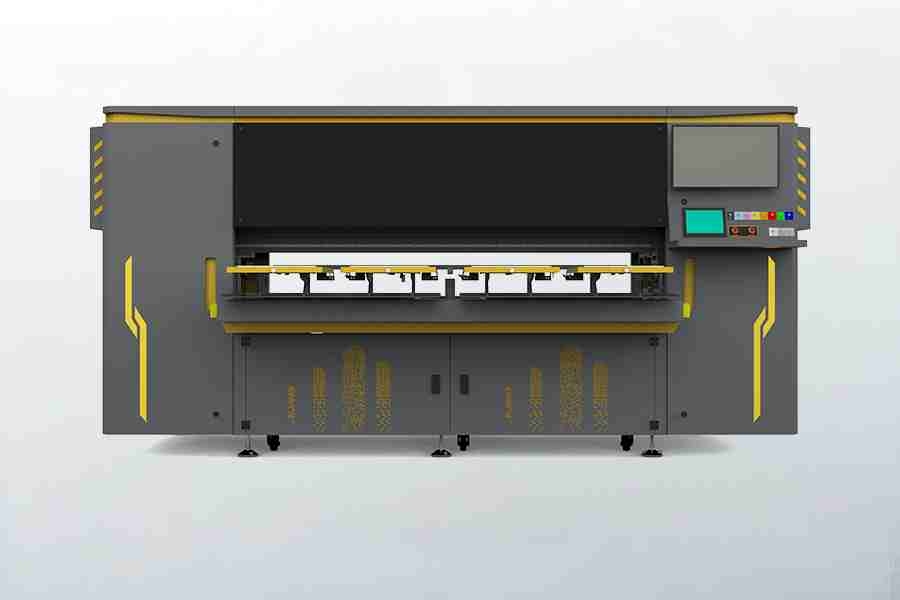
When comparing throughput between dual- and quadruple-station printers, the latter achieves nearly double garment-per-hour rates due to parallelized operations. For instance, while a dual-station model may handle alternating cycles efficiently, its idle time remains unavoidable between transitions. In contrast, the quadruple system’s continuous rotation minimizes latency entirely.
Print resolution consistency also benefits from distributed load balancing across stations—each equipped with calibrated printheads ensuring uniform droplet placement at micro-level precision. Maintenance intervals extend significantly thanks to automated cleaning modules integrated into every station’s workflow.
Durability under extended cycles is further enhanced by servo-driven motion systems similar to those used in hybrid oval printers that combine screen and digital technologies. Equipped with Fujifilm servo motors, THK linear guides and magnetic levitation motor drive systems, ensuring stable operation, high overprinting accuracy, and a maximum platform error ≤0.2mm for precise alignment between screen and digital patterns.
Cost-Benefit Considerations for Industrial Adoption
While initial investment costs are higher for a DTG printer with quadruple-station configuration compared to dual setups, long-term productivity gains offset these expenses through reduced downtime and increased yield per shift. Energy consumption patterns show improved efficiency per printed unit due to shared curing resources among stations.
For medium to large-scale textile manufacturers seeking scalable solutions aligned with Industry 4.0 standards, return-on-investment projections remain favorable within two years of deployment when combined with smart factory integration tools.
Integration with 2026 Industrial Ecosystems
Compatibility with Smart Manufacturing Systems
Modern DTG printer designs are increasingly compatible with IoT-based production ecosystems. Quadruple-station models can connect directly to centralized monitoring platforms where predictive maintenance analytics anticipate nozzle wear or fluid inconsistencies before they affect quality.
Integration with enterprise resource planning (ERP) systems allows automated job scheduling based on order priority or fabric type—optimizing material usage while maintaining consistent output rates across shifts.
Sustainability and Resource Efficiency in Modern DTG Operations
Sustainability remains central to HJD’s technological roadmap for 2026. Precise ink deposition technologies minimize waste by controlling droplet volume at micron-level accuracy. Energy-efficient curing methods such as low-temperature LED drying align production practices with global carbon reduction goals.
Moreover, eco-friendly inks formulated for high-speed workflows reduce volatile organic compound emissions while maintaining vivid color reproduction on cotton blends—a critical factor in meeting environmental compliance standards without sacrificing performance.
Future Directions in Multi-Station DTG Printing Technology
Emerging Innovations Beyond 2026
Future iterations of multi-station DTG printers will likely incorporate breakthroughs in microfluidic printhead engineering—enabling faster ink delivery rates without compromising droplet uniformity. AI-assisted calibration systems will further enhance interstation synchronization by learning from historical performance data to predict optimal jetting parameters dynamically.
Manufacturers are also exploring modular expansion concepts allowing operators to upgrade from dual- to quadruple- or even six-station configurations as demand scales—ensuring long-term adaptability within evolving textile markets.
The Role of Quadruple-Station Systems in Textile Industry Transformation
The rise of mass customization models depends heavily on flexible yet efficient production tools like the DTG printer with a quadruple-station configuration. By combining automation-ready hardware with adaptive software intelligence, these systems enable on-demand garment personalization at industrial speeds.
Integration with robotic handling units will soon allow fully automated lines—from fabric loading through packaging—reducing human intervention while enhancing safety standards across facilities worldwide. As global competition intensifies toward 2026 and beyond, HJD’s leadership in multi-station DTG technology positions it as a catalyst driving transformation within digital textile manufacturing ecosystems.
Conclusion
Quadruple-station DTG technology redefines industrial garment printing by merging speed, precision, automation compatibility, and sustainability into one unified platform. From smart calibration algorithms to eco-conscious curing processes, these innovations represent the next frontier of textile production efficiency led by HJD’s engineering excellence.
For inquiries about integrating advanced multi-station solutions into your facility’s workflow—contact us today.
FAQ
Q: What makes HJD’s DTG printer with quadruple-station different from traditional models?
A: HJD’s system utilizes four synchronized platens operating simultaneously within a circulating structure that eliminates idle time while maintaining precise alignment through intelligent servo control mechanisms.
Q: How does a DTG printer with dual-station compare in productivity?
A: Dual-station models offer efficient alternating operations but still involve transition delays between cycles; quadruple configurations double throughput by enabling continuous parallel processing across all stations.
Q: Can HJD’s DTG printer integrate into existing smart factory environments?
A: Yes, modern units support IoT connectivity for real-time monitoring and predictive maintenance analytics while integrating seamlessly into ERP-based job scheduling frameworks common in Industry 4.0 ecosystems.
Q: Are eco-friendly inks compatible with high-speed industrial workflows?
A: HJD employs sustainable pigment formulations optimized for rapid curing processes that reduce waste generation without compromising vividness or durability under heavy-duty usage conditions.
Q: What future upgrades can be expected beyond the current quadruple design?
A: Upcoming developments include AI-driven calibration modules improving interstation consistency along with modular expansion capabilities allowing scalable upgrades from four to six stations as production demand grows.