What is the impact of DTF technology on the current printing market?
The global printing industry is undergoing a significant transition where digital technology is comprehensively replacing traditional processes. Within this landscape, DTF printing has emerged as the absolute mainstream solution for small-batch quick response and high-quality customization. With nearly 20 years of industry experience, HJD specifically addresses the critical pain points of traditional screen printing by providing efficient, reliable, and one-stop industrial printing solutions.
What is DTF Printing and Why is it Revolutionizing the Industry?
What defines the core concept of a DTF transfer printer?
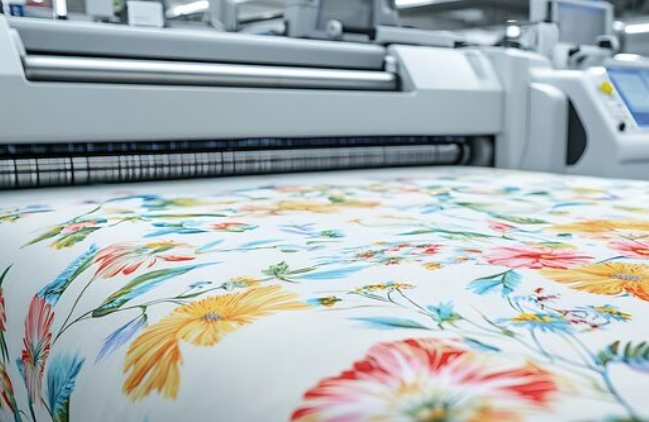
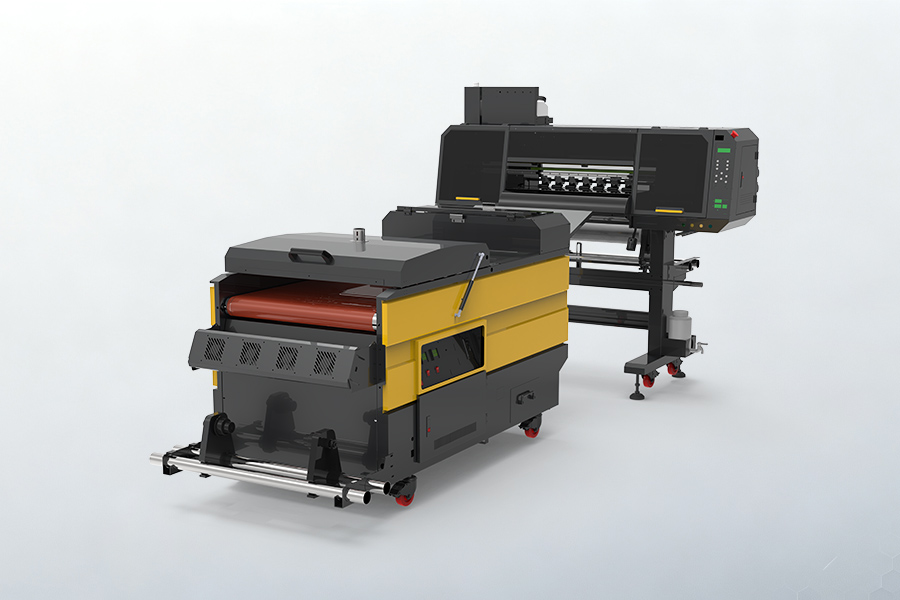
The DTF printer is a high-end, digital device that combines printing, powder, and a dryer in one compact unit. In simple terms, it prints on a PET film with specialized textile pigment ink, then applies a hot-melt powder as the adhesive. Once cured, the film is ready for heat transfer onto a wide range of fabrics. This method of printing does not require any pre-treatment of garments as opposed to Direct-to-Garment (DTG) printing, and can print on a variety of different materials.
How Does a DTF Printer Work? A Detailed 4-Step Process
How does the DTF printer achieve high-precision patterns?
For high-quality product printing, the process begins with high-end equipment to guarantee maximum stability and accurate printing. HJD printers utilize Epson i3200-A1 printheads to deliver high-speed, high-quality output. With an X-axis alloy crossbeam and silent linear guides, the printing is accurately positioned with maximum precision, and color registration errors are below 0.1mm.
What is the secret behind the powder shaking process?
The printed film is then introduced into the integrated powder shaker. The machine sprinkles the hot-melt powder onto the wet ink. An intelligent control system ensures uniform spreading of powder, and the circulating powder supply automatically replenishes powder as required. Excess powder is removed from the non-image areas through high-frequency vibration to leave adhesive only on the printed design.
How does the curing system ensure wash-resistance?
Next, the powdered film is guided through a curing tunnel. Advanced powder dryers are fitted with 3 temperature zones: preheating, drying, and color fixing. In these zones, the hot-melt powder melts perfectly and adheres to the ink. The printed design is then soft, permeable, and extremely scratch-resistant even after washing several times. Efficient thermal insulation and intelligent temperature control guarantee energy-efficient production.
What happens during the final heat transfer phase?
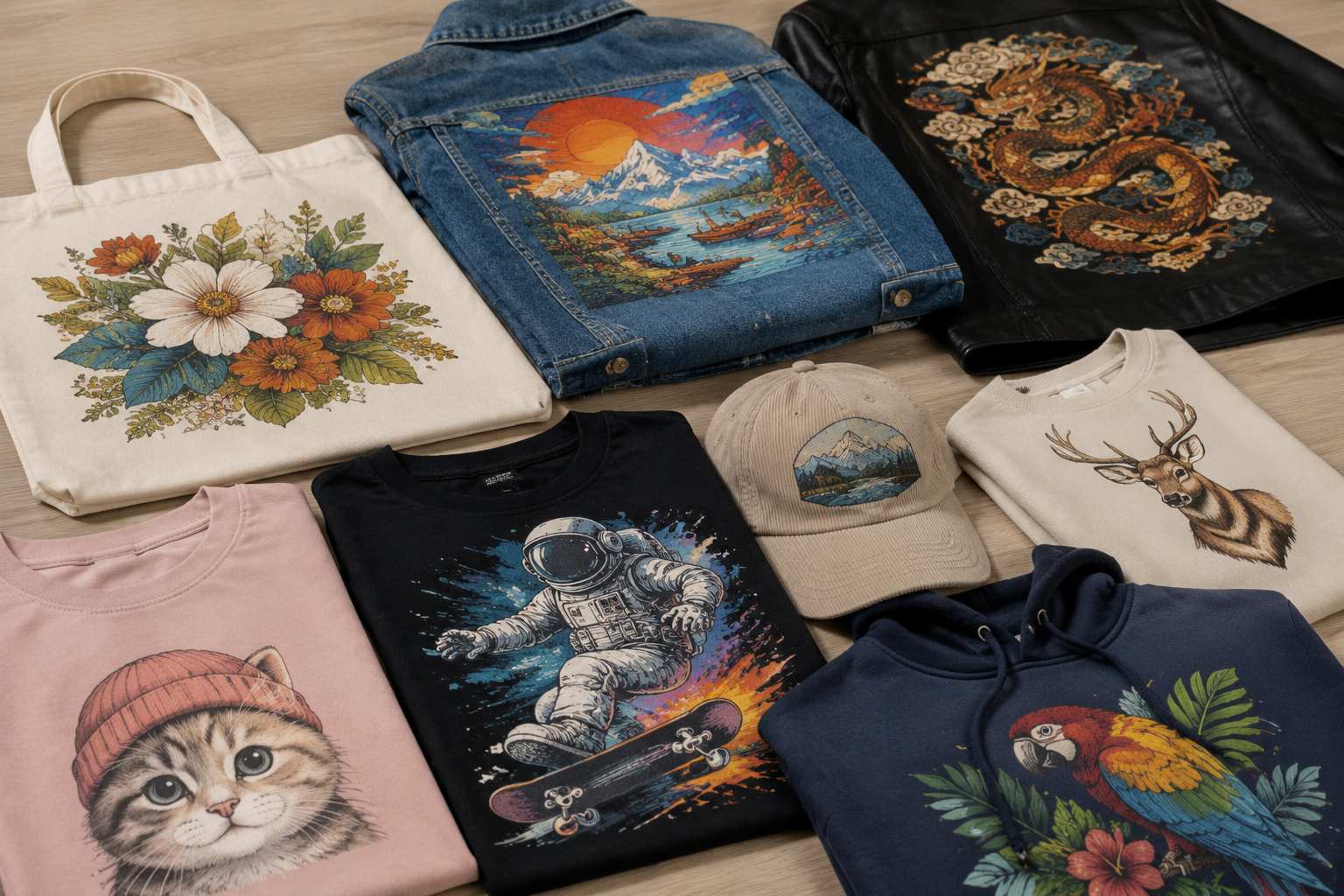
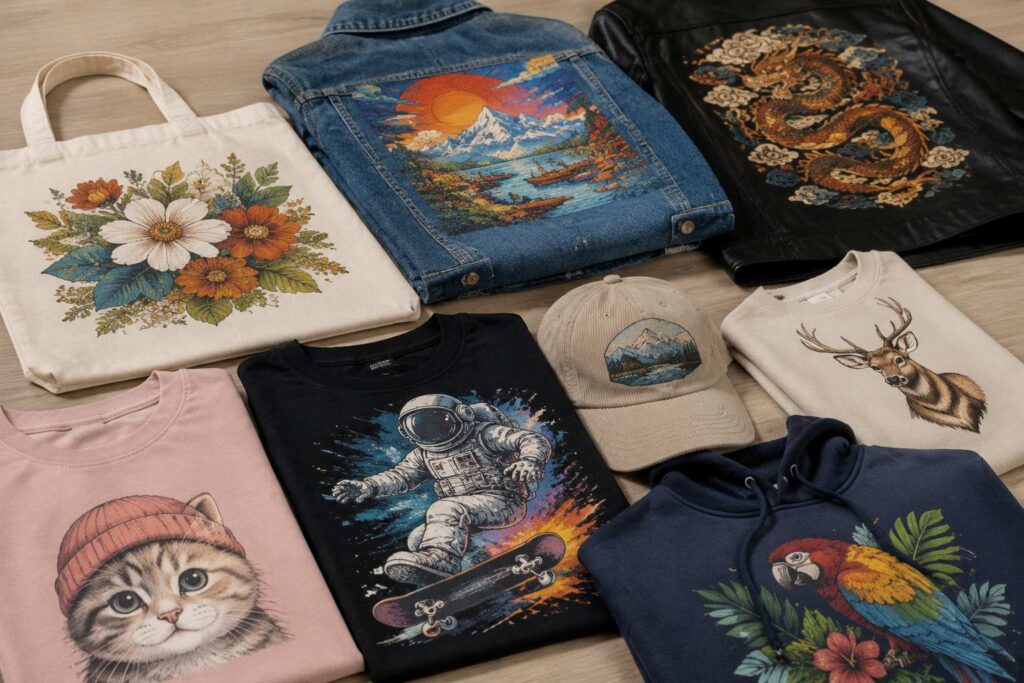
There is also a process to transfer the design to the final medium. Once the film has cured, it can be transferred onto a wide variety of fabrics, including cotton, polyester, leather, and blends. The film is placed on top of the fabric and then stuck using a heat press. Designs can be printed on clothing, including T-shirts and hoodies, as well as a vast array of accessories, including bags, shoes, and home products.
What are the Key Features of High-End DTF Printing Equipment?
When printing with DTF, the biggest problem with white ink is sedimentation, which leads to clogging of the nozzles. HJD printing equipment has an independent anti-clogging system and a stirring system for the white ink. This system constantly keeps the white ink in motion, preventing any particles from settling and allowing for the best possible ink flow. In addition, the HJD printer is equipped with maintenance-free integrated lifting ink stacks. These perform the automatic functions of cleaning, scraping, and moisturizing the printheads, which extends their service life.
Which Materials and Industries Benefit Most from a DTF Transfer Printer?
Can you use DTF printing on materials beyond apparel?
The major market for apparel, however, is not the only material that can be printed with a DTF transfer printer. Many of our customers use leather, PU, and films for shoes and bags. Our HJD printers are also designed for thin materials and for printing on shoe fabrics. To prevent wrinkling or sticking of the material, the feeding tension can be controlled precisely. That’s why canvas bags, cushions, notebooks, and caps can be printed perfectly with DTF transfers.
Why is a DTF printer the ideal choice for e-commerce and creative studios?
Due to the low entry barrier and high flexibility, DTF printing is especially preferred by creative studios and e-commerce sellers. Small workshops can also work with very compact A3 printing machines with industrial precision on a desk. They enable “same-day delivery” for individual orders, as opposed to other printing methods, which need color separation for print and plate making. This is also why, in the current market trend, mainly small batches of different articles are ordered quickly in succession.
How to Maintain Your DTF Printer for Long-Term Performance?
What are the daily maintenance essentials for a DTF printer?
The scheduled maintenance will assist in ensuring the printer maintains Reliable performance. On a daily basis, the printhead surface and nozzle plate need to be wiped with solutions specifically designed to prevent the ink from crystallizing. Check the ink levels, check the supply pressure. Run the nozzle self-test to ensure there are no missing dots. The guide rails and platform require wiping down on a regular basis with a damp cloth to remove any dust or ink residue that may have built up on the surface. This will assist in maintaining the mechanical precision required for producing high-quality prints.
How to protect the printhead during long-term storage?
For equipment that is to be put into seasonal storage or will be idle for an extended period of time, it is best to service the most sensitive components on the printer. Remove any residual ink from the printer and perform a complete cleaning of the ink path to prevent the ink from crystallizing. Also, store the printheads with the supplied protective caps installed. Store the printer in a dry, well-ventilated area with constant temperature and humidity. Avoid direct sunlight.
Conclusion
The adoption of DTF printing technology marks a new stage in the industrial development of textile production. The integration of the high speed and precision of industrial printers with the flexibility of digital prints is implemented in solutions such as the HJD series. These solutions enable manufacturers to adopt more efficient, sustainable, and flexible production methods. As the printing industry becomes increasingly automated and intelligent, the backbone of the modern printing industry of garments and accessories will be the DTF printer, which unites high-quality printed products, competitive prices in the market, and an individual approach to every customer.
FAQ
Q: What is the average production speed of an HJD DTF printer?
A: Printing speed will depend on the configuration of your printer. Standard 2-head printing will allow a 2-color printing transfer printer to print 6-8m²/h. However, 4-head printing will double this to 11-12m²/h. HJD’s flagship 12-head, 4-color model can achieve production speeds of up to 100 m²/h.
Q: Which fabrics are compatible with DTF printing?
A: The DTF printing process is very versatile and can print on cotton, linen, polyester, blends, denim, and even fleece. It is also very suitable for other materials like leather, PU, etc., and can be used for most special shoe materials. The method is very suitable for the textile industry and the accessories industry.
Q: How does HJD ensure the stability of a DTF transfer printer during mass production?
A: The base of HJD is made of high-strength thickened aluminum alloy, and the X-axis alloy crossbeam is designed to keep the platform of the printing area flat within 0.03mm. Silent linear guides and high-precision stepping motors are applied to guarantee that the color registration errors remain within 0.01mm. Even during extended periods of high-speed continuous production, the printer can still work stably and efficiently.